
7 Things I Found Out About My $14,000 Breast Lift (That Made Me Cancel the Appointment)
I was 56, post-menopause, and convinced surgery was the only real option. Then I spent three months reading what surgeons rarely put in the brochure. Here is what changed my mind.


I want to be clear about something before you read a single word of this: I am not a doctor. I am not a wellness influencer. I am a 56-year-old woman who spent almost two years seriously considering a breast lift, collected three consultation quotes, and then spent another three months reading everything I could find before I made a final decision.
What I found surprised me. Some of it was reassuring. Some of it was information the brochures skipped entirely. And one of the things I discovered changed the entire way I thought about the decision.
If you are at any stage of considering a lift, or simply wondering whether there is anything worth trying before that conversation, these are the seven things I wish someone had told me at the start.
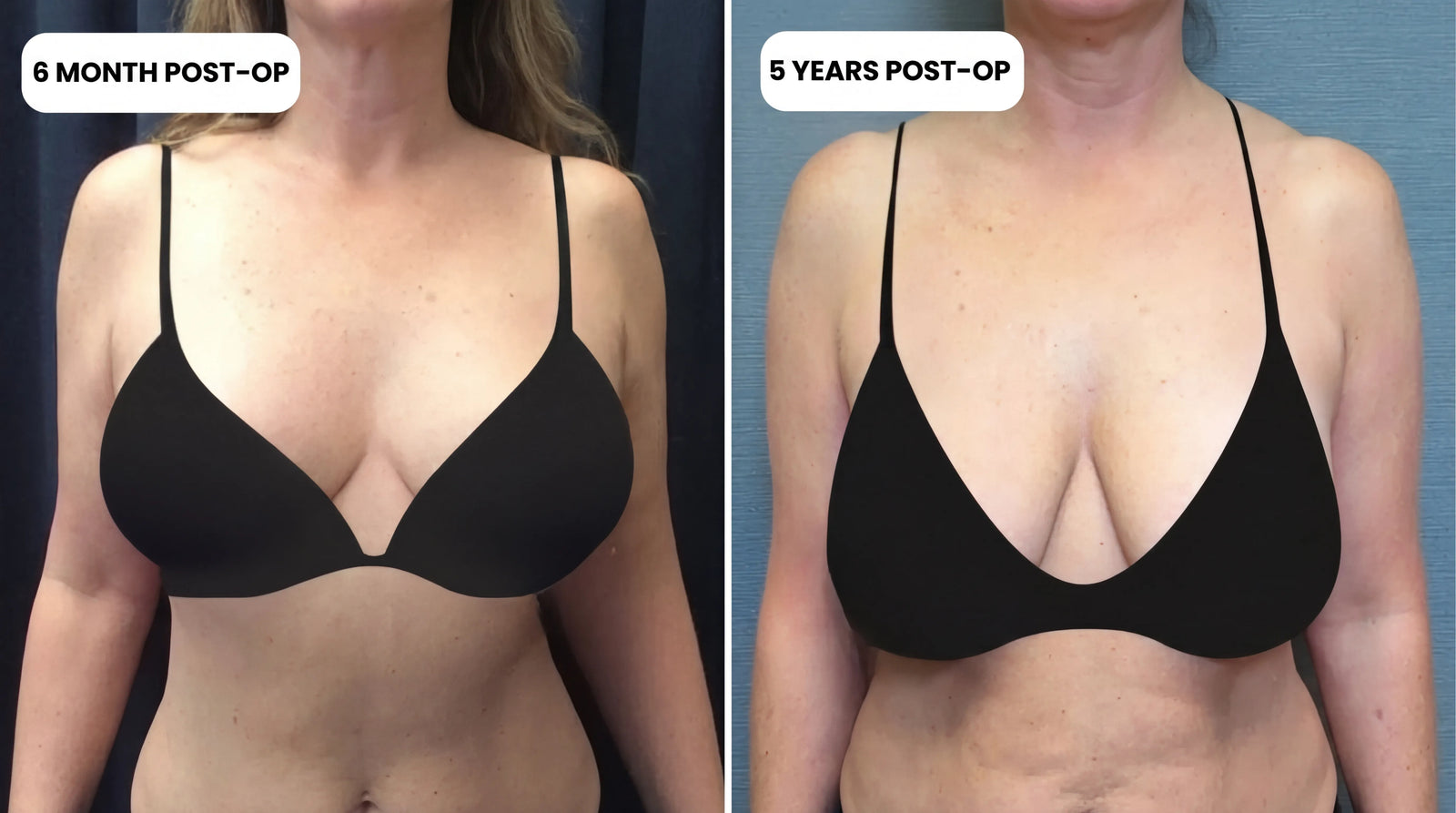
The Before/After Photos Show the Best Possible Outcome at the Best Possible Moment
Consultation brochures and clinic websites are built around transformation photography. The images are striking. They show lifted, smooth results taken at the optimal point in the healing window, usually six to twelve weeks post-procedure, when swelling has resolved and the new position is at its highest and firmest.
That is the nature of medical marketing. It is not dishonest, exactly. But it tells an incomplete story.
Those photos represent the peak of the result, not the typical result three or five years later. Skin, breast tissue, and the effects of gravity do not stop because a procedure has been performed. The lifting sutures work beautifully at first. Over time, the same forces that brought things south before surgery continue their work.
A long-term outcomes review found that a significant portion of patients who undergo a breast lift will see meaningful descent again within three to seven years. Some return for revision surgery. Some accept the outcome. Very few were told to expect this at the consultation stage.
- Results at 6-12 weeks (the optimal window)
- The best outcome for this patient, not the average
- A single point in time, not a ten-year outcome
- How the result looks at year three or five
- The effect of continued aging, weight change, or pregnancy after surgery
- The revision rate for this procedure
Surgery Leaves Something Behind That No One Spends Much Time On in the Consultation
The consultations I attended were professional, thorough, and genuinely informative about what the procedure involved. Every surgeon explained the process clearly. What varied dramatically was how much time was spent on scarring, and what the scar outcomes actually look like.
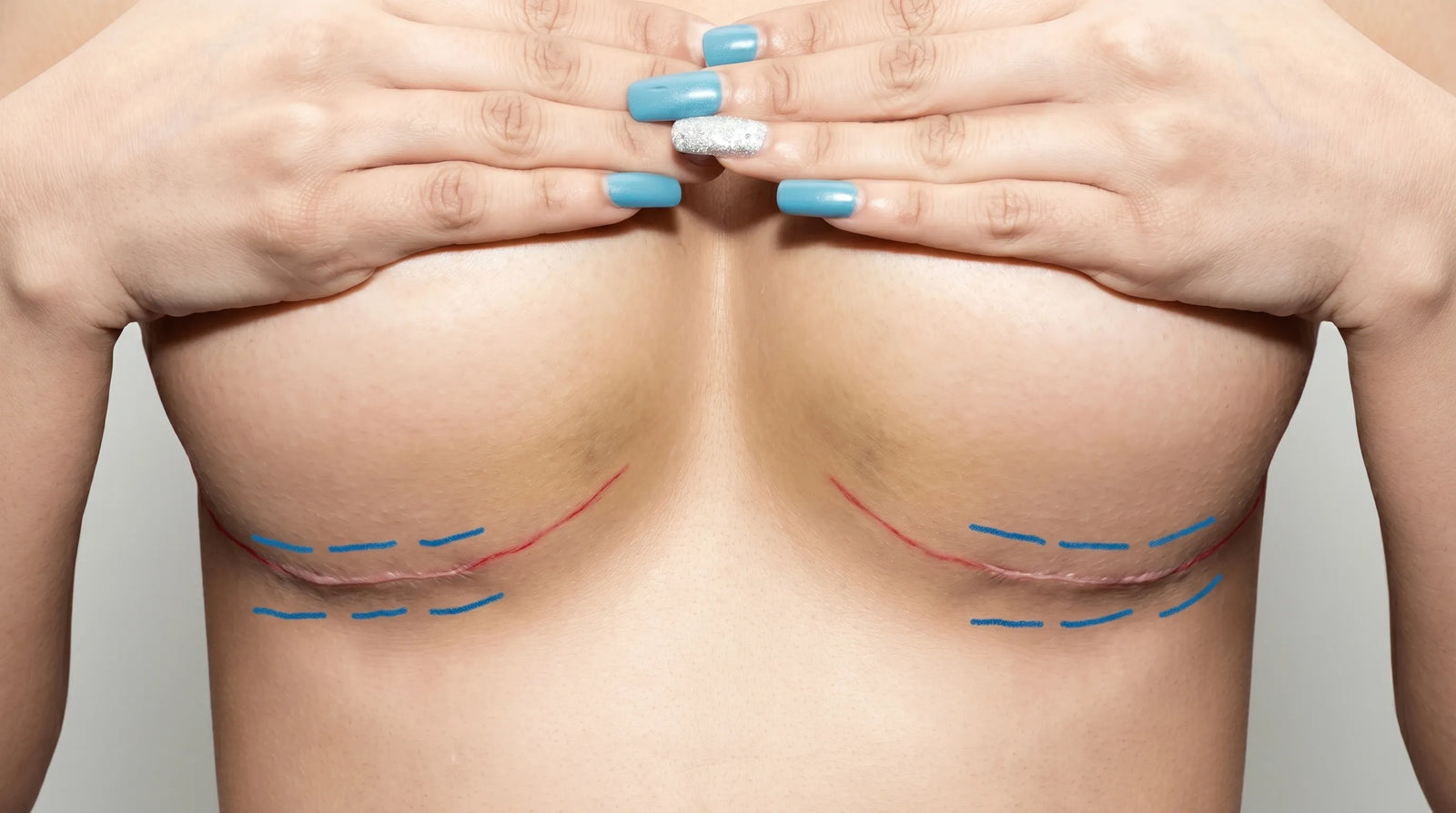
A breast lift involves incisions. Depending on the technique, this can mean an anchor-shaped pattern, a lollipop pattern, or a crescent pattern. Each leaves permanent marks. The visibility of those marks depends on skin tone, genetics, healing behavior, and factors no surgeon can fully predict in advance.
Some women are completely satisfied with their scars. Others find them more visible than they expected. A small percentage develops hypertrophic or keloid scarring. This is not the surgeon's failure. It is the nature of how individual skin heals. But it is permanent, and it is worth understanding before signing.
- Scarring outcomes vary significantly by skin type and genetics
- Most scars fade over 12-18 months but never disappear entirely
- Revision scar treatments exist but add cost and recovery
- Non-invasive options leave nothing permanent behind
Biology Keeps Moving After Surgery, and That Is Not the Surgeon's Fault
Every consultation I attended was honest about recovery time: typically six weeks before returning to normal activity, sometimes longer. The surgeons were also clear that the final result takes time to settle. What was less prominent in every conversation was the longer arc: what happens to the result as the body continues to age.
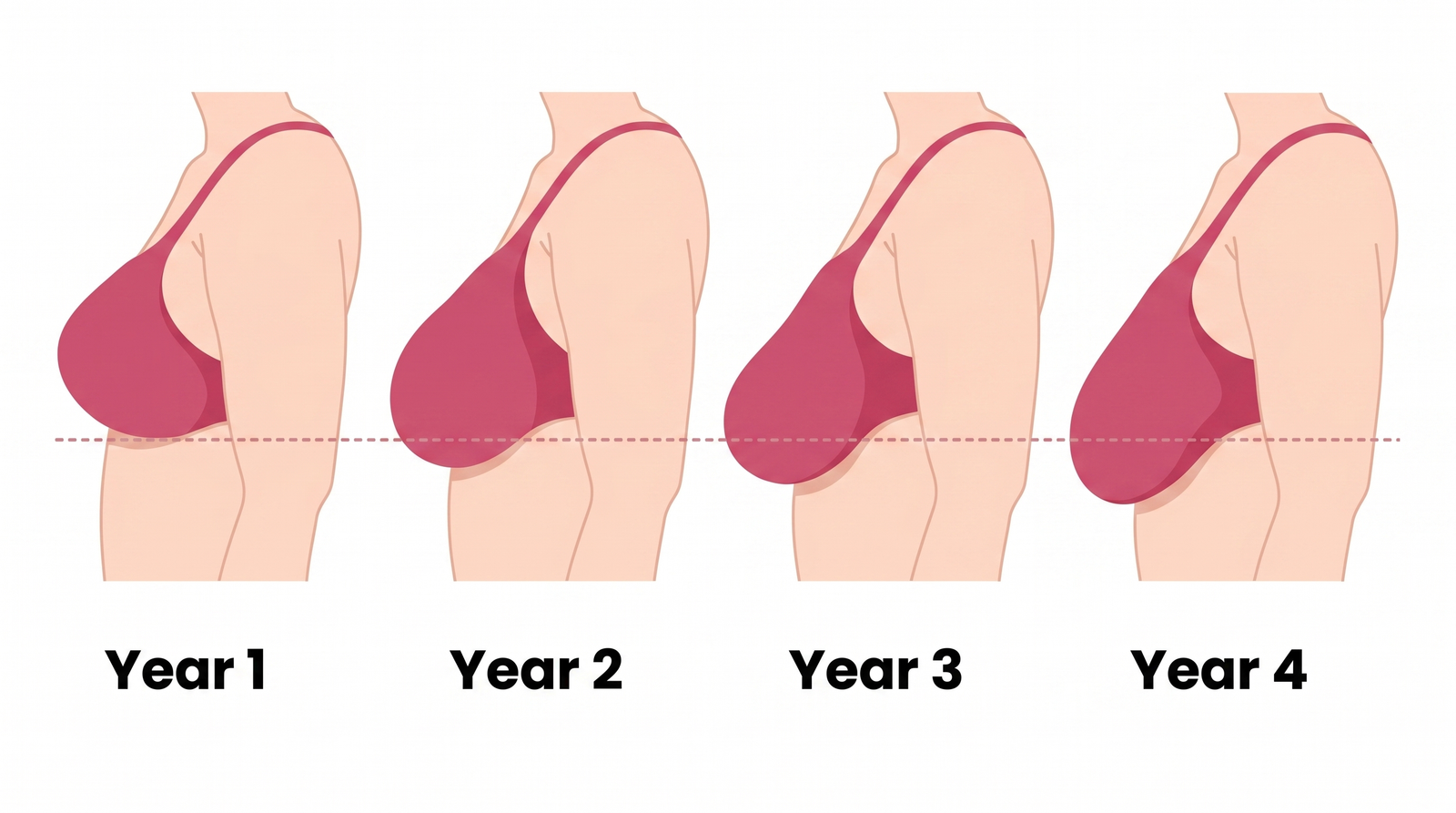
Skin elasticity declines continuously after our thirties. Collagen production slows. The ligaments that support breast tissue stretch with gravity and time. A surgical lift repositions everything to a higher point, but it does not change the underlying biology that caused the descent in the first place.
Factors that affect how long results last include: age at the time of surgery, skin quality, weight fluctuations, pregnancy after the procedure, and the natural pace of aging. Surgeons cannot control these variables.
- Gravity and the ongoing pull on skin and tissue
- Changes in skin elasticity and collagen production (natural with age)
- Weight gain or loss
- Pregnancy or breastfeeding after the procedure
- The natural progression of menopause and hormonal change
The Technology Behind Luvi Is Not New. It Just Hasn't Been Made This Accessible Before.
Red and blue light therapy are not wellness trends. They are wavelengths studied for decades in clinical and research settings for their effects on skin tissue. Red light at 660nm has been examined for its role in collagen synthesis and skin firmness. Near-infrared light at 850nm has been studied for deeper tissue penetration and circulation support.
These wavelengths are used in professional skin clinics and dermatology practices around the world.
What has changed recently is access. Until the last few years, this type of light therapy was available only in clinical settings, which meant booking appointments, paying per-session fees, and working around clinic hours.
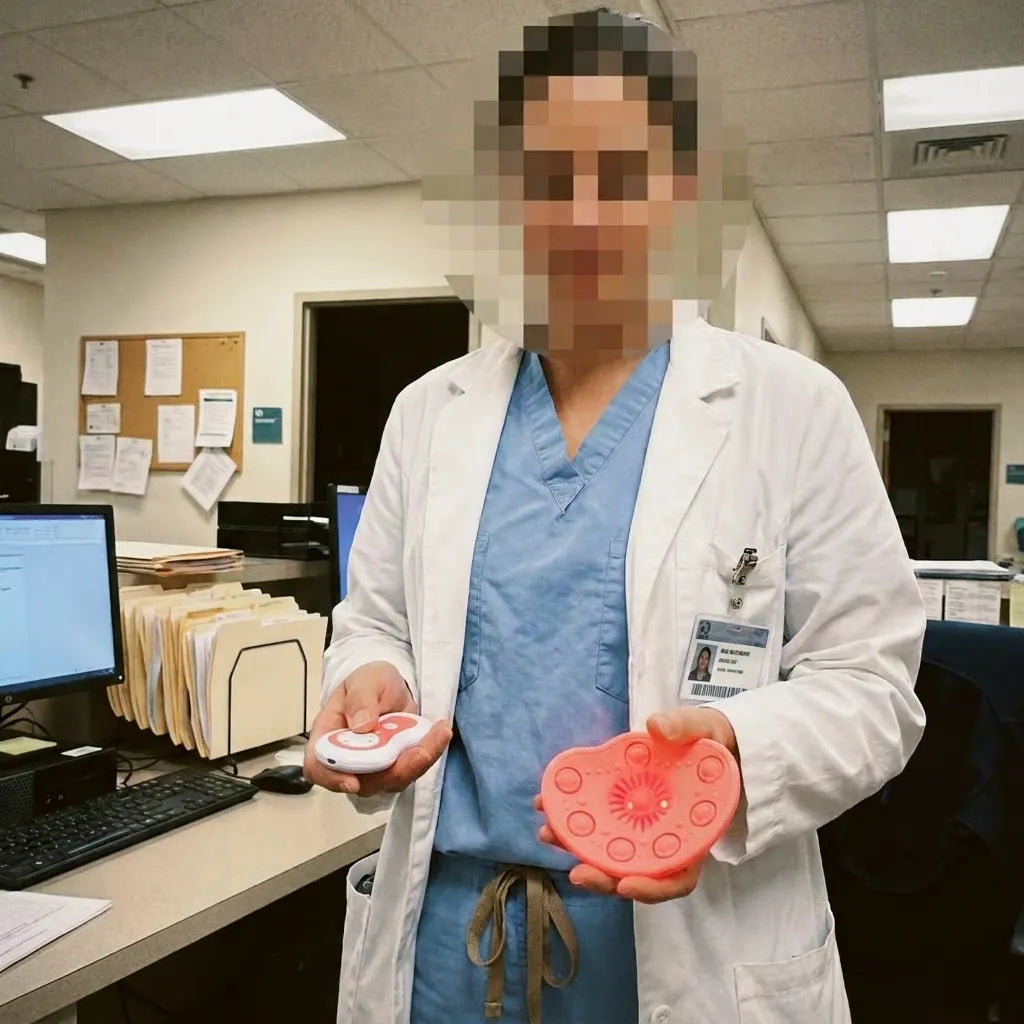
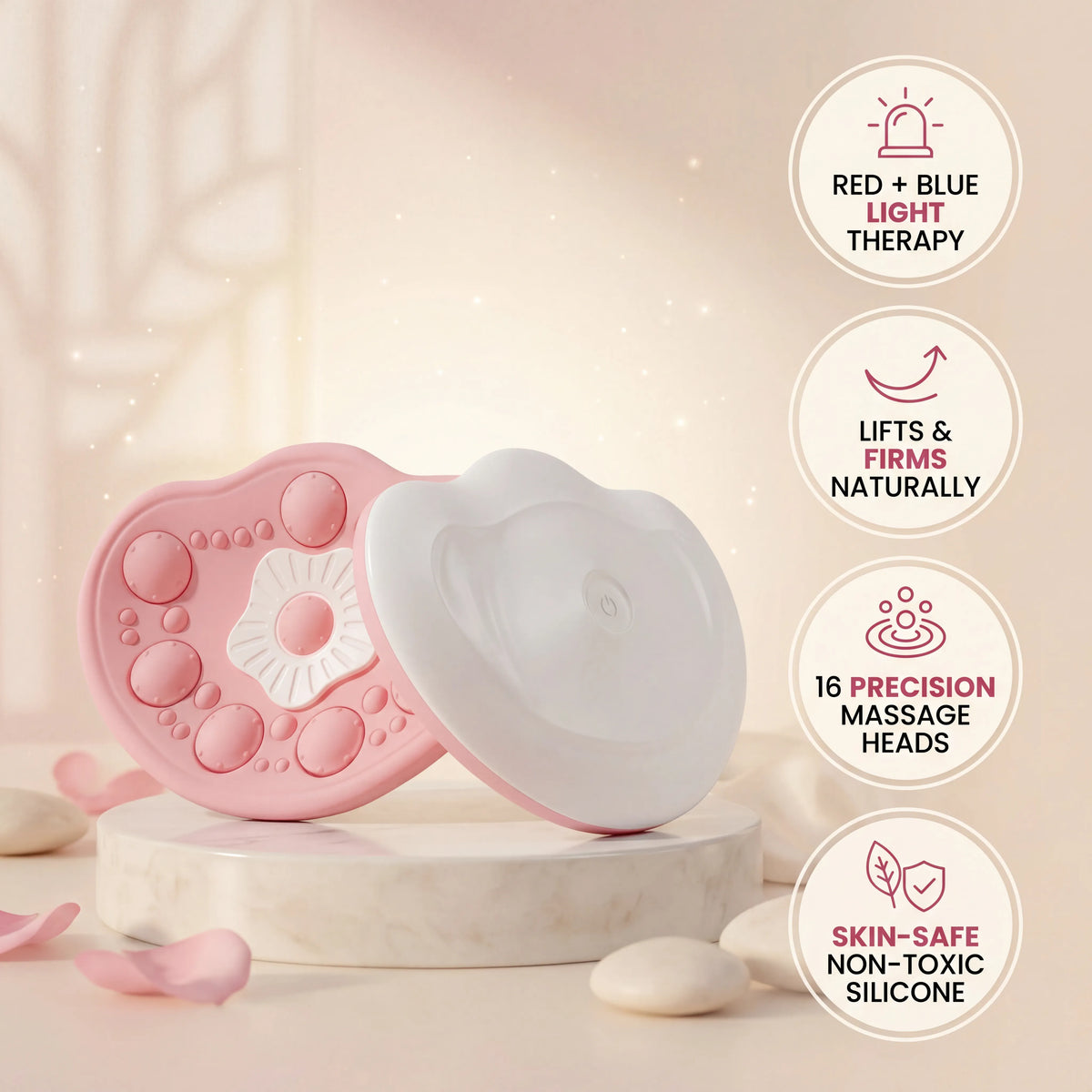
The Luvi device is FDA Registered, built on the same type of red and blue light technology used in skin clinics, and designed for 20 minutes of use at home. The 16 precision massage heads deliver micro-massage that boosts circulation and helps the firming oil and peptide cream absorb deeper into the tissue during each session.
- 660nm red light wavelength: the same type studied in skin clinics for collagen support and skin firmness
- 850nm near-infrared wavelength: studied for deeper tissue support and circulation
- 16 precision massage heads for micro-circulation and deeper product absorption
- FDA Registered for cosmetic use
- Built with skin-safe, non-toxic silicone
- Wearable: 10 minutes each side, while you read, cook, or watch TV
- Support the skin's own firming process from the surface and deeper down
- Improve the lift and fullness you already have, not alter your shape
- Work as part of a 3-step daily ritual (oil, device, cream)
The Real Cost of Surgery Is Not Just the Number on the Quote
The surgery quotes I received ranged from $11,500 to just under $15,000 for the procedure itself. That is a significant number, but it is also the starting point, not the full picture.
Once you begin to add the surrounding costs, the number climbs considerably. Anesthesia (often billed separately), pre-operative bloodwork, the surgical bra and compression garments, post-operative medications, and at least one to three follow-up appointments are typical additions.
Then there is the time. Most surgeons recommend at least six weeks before returning to full physical activity. For someone who works, cares for children or parents, or simply cannot disappear from daily life for six weeks, that six weeks has a real cost.
- Procedure: $11,500-$14,900
- Anesthesia: $1,000-$2,000 (often separate)
- Pre/post-op appointments: $500-$1,000
- Garments, medications, supplies: $300-$600
- Time off work (6 weeks): variable, often significant
- Revision surgery if needed: additional $8,000-$14,000
- Full system (device + firming oil + peptide cream): $99
- 3 free gifts included
- Free express shipping
- 90-day money-back guarantee
- Zero recovery time. Zero revision cost risk.

The Thing About Reversibility Is That One Door Closes When You Choose the Other
Surgery consultations present the procedure as a solution. And in the right circumstances, for the right candidate, it genuinely is. The surgeon explains what they will do, what the result will look like, and what the recovery involves. It sounds finite and manageable because it is designed to sound that way.
What the framing rarely makes explicit is the permanence. A breast lift is not a trial. You cannot undo an incision. You cannot return tissue to its previous position after it has been repositioned. The result, whether you love it or not, is what you have.
This is not a reason not to have surgery. It is a reason to try everything reversible first.
- 90-day money-back guarantee: if it does not work, full refund
- No recovery time, no marks, no permanent change
- You can still choose surgery afterward
- Once done, the result is what you have
- Revision is possible but costly and not guaranteed
- The option of doing nothing is no longer available

The 90-Day Guarantee Completely Changes the Risk Calculation
When I first looked at Luvi, my initial reaction was skepticism. I had seen skincare products promise results and deliver nothing. I had spent money on firming creams that were pleasant to use and did nothing to change the underlying structure. I was not in the habit of trusting beauty products that made meaningful claims.
The 90-day money-back guarantee changes the math in a way that stopped me in my tracks. Luvi's guarantee is specific: use the system the way it is meant to be used, and if you don't see and feel firmer, lifted results within 90 days, contact them for a complete refund. No questions, no hassle, no restocking fees.
Compare that to surgery. There is no refund clause for a surgical result you are not happy with. Revision is available, at additional cost, with additional recovery, and with no guarantee the second result will be better.
- Maximum downside: none (full refund if unsatisfied)
- Maximum upside: firmer, fuller-looking results you can maintain at home for $99
- What you lose if it doesn't work: 90 days of trying and nothing else
- Maximum downside: result you are not happy with, revision cost to address it
- What you lose if unsatisfied: $14,000+ and a recovery period you cannot get back
- Full refund, no questions asked, if you use the system consistently
- No restocking fees. No return shipping penalty.
- The risk stays with Luvi, not with you.

What I'm Using (And Why It's Actually Working)
After three months of research and a lot of back-and-forth, I decided to try Luvi before committing to anything else. I'm now past the twelve-week mark. Here is exactly what I use, how it works, and what I've noticed.
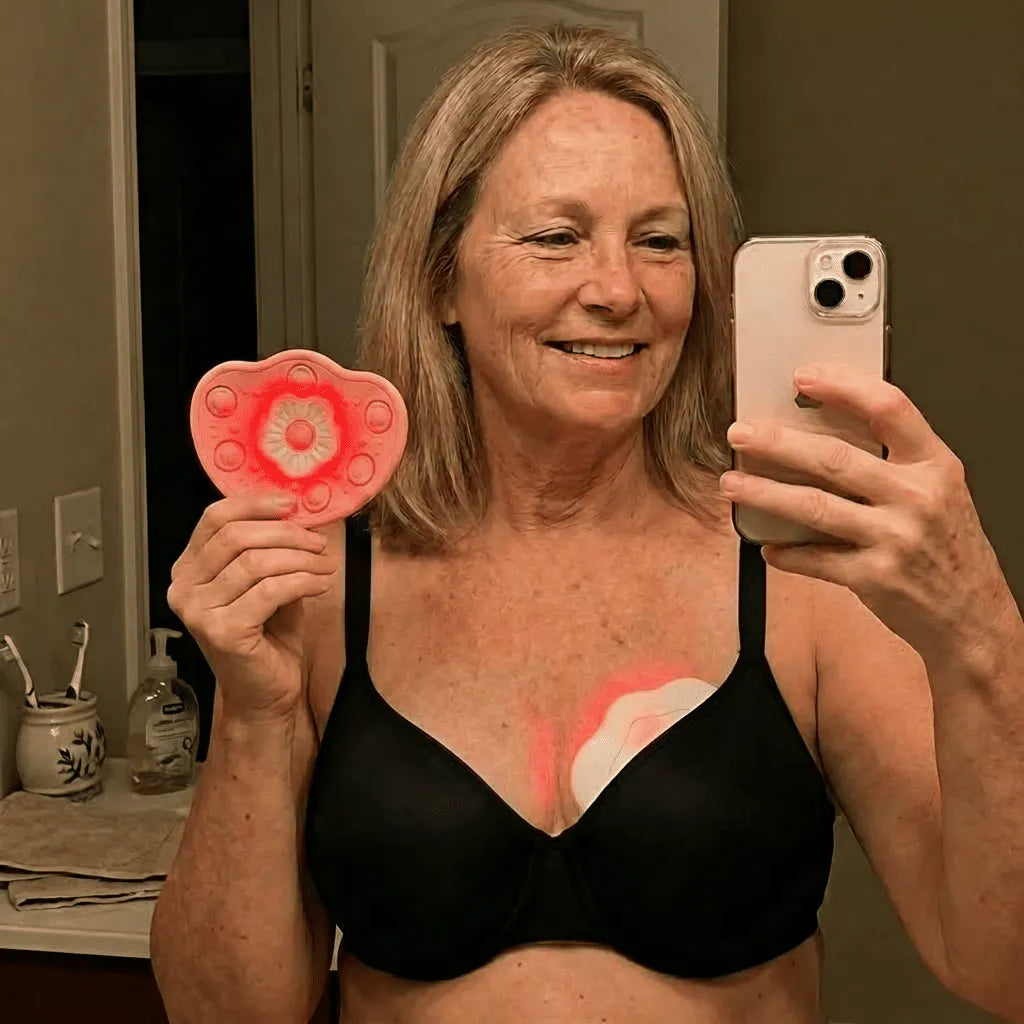
- FDA Registered, built on red and blue light wavelengths studied in dermatology-grade clinics for skin firmness
- 3-step system that takes 20 minutes a day, fitting into my morning routine before I get dressed
- 16 precision massage heads that increase circulation and help the oil and cream absorb more deeply
- 90-day money-back guarantee that meant I had nothing to lose by trying
- Designed to fit all cup sizes and shapes, including mine
- 18,000+ verified customer reviews, 4.9/5 average
Apply a small amount to clean, slightly damp skin in gentle circular motions. The oil preps the skin and helps everything absorb deeper during the device step.
Place the device on each side for 10 minutes. Choose your light and vibration setting and relax. I watch the news during this step. It genuinely feels like nothing, until you start to notice the results.
Massage the peptide cream into the skin in gentle upward motions until fully absorbed. It locks in the routine and keeps the skin nourished.
Should You Try Luvi Before Surgery?
I want to be genuinely useful here, not just persuasive. This works for some women and will not be the right fit for others. Here is my honest read on who this is and is not for.
- You are post-menopause and noticing changes in firmness and how everything sits
- You are between 40 and 65 and looking for a maintainable daily routine, not a one-time intervention
- You are considering surgery but have not yet committed, and want to try something reversible first
- You are skeptical and want a 90-day guarantee before spending real money
- You can commit to 20 minutes a day, consistently, for at least 8-12 weeks
- You are looking for results equivalent to significant surgical intervention
- You need a medical solution for a condition that requires clinical care
- You are unable to commit to a consistent daily routine for at least 8-12 weeks
- You are pregnant or breastfeeding currently (consult your doctor before beginning any new routine)
My Recommendation
At 56, after two years of research, three consultation quotes, and twelve weeks of using this system every morning, this is where I landed:
Try Luvi first. Not because surgery is wrong, but because the logic of the sequence is hard to argue with.
You are looking at $99 with a 90-day complete money-back guarantee on one side, and $14,000 with no refund clause and a six-week recovery on the other. One of those carries zero downside if you're not satisfied. The other does not.
Surgery will still be available afterward if you decide you want it. Nothing about trying Luvi takes that option off the table. But trying surgery first takes everything else off the table permanently.
Start with the reversible option. That is the only recommendation that makes complete logical sense.
What Our Customers Are Saying
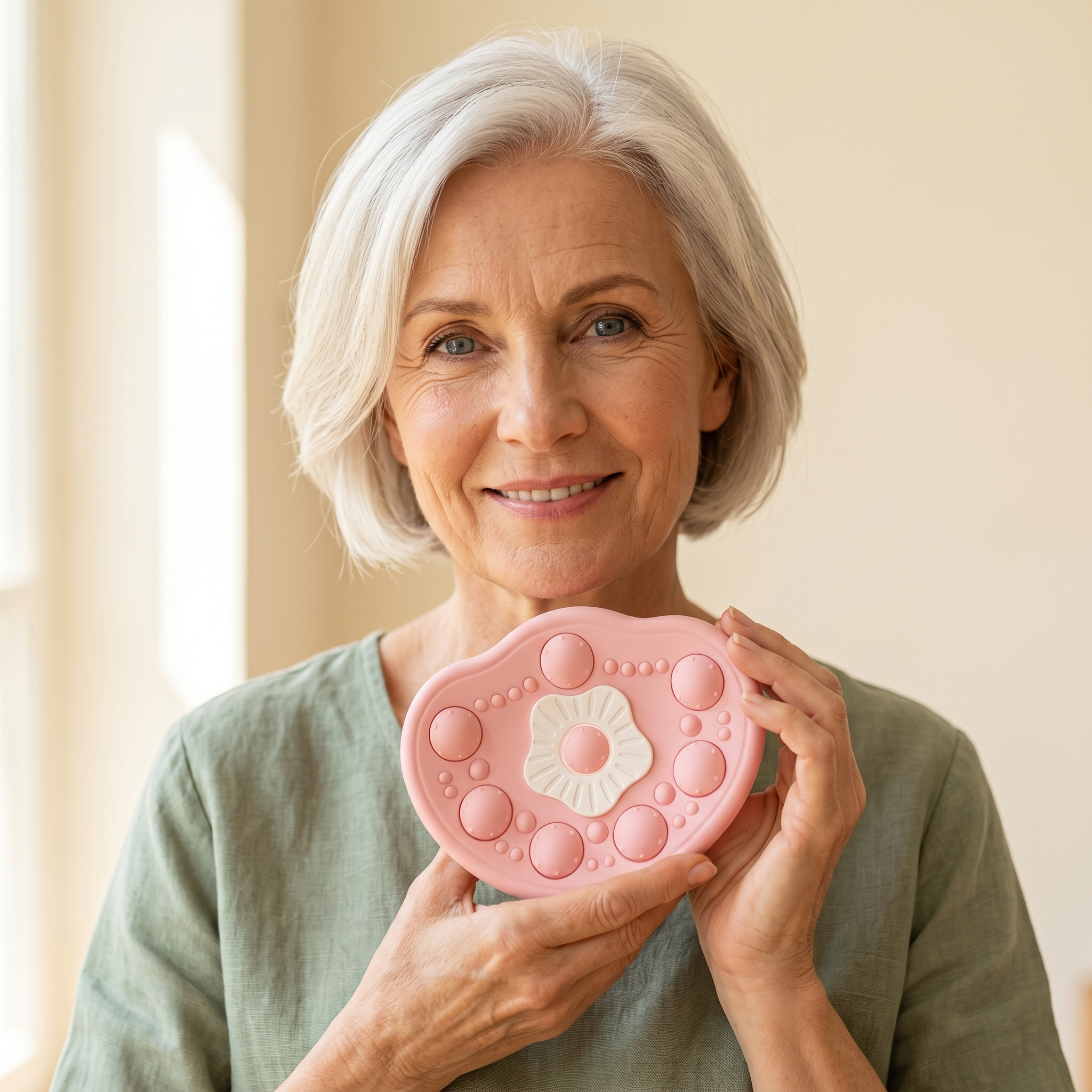
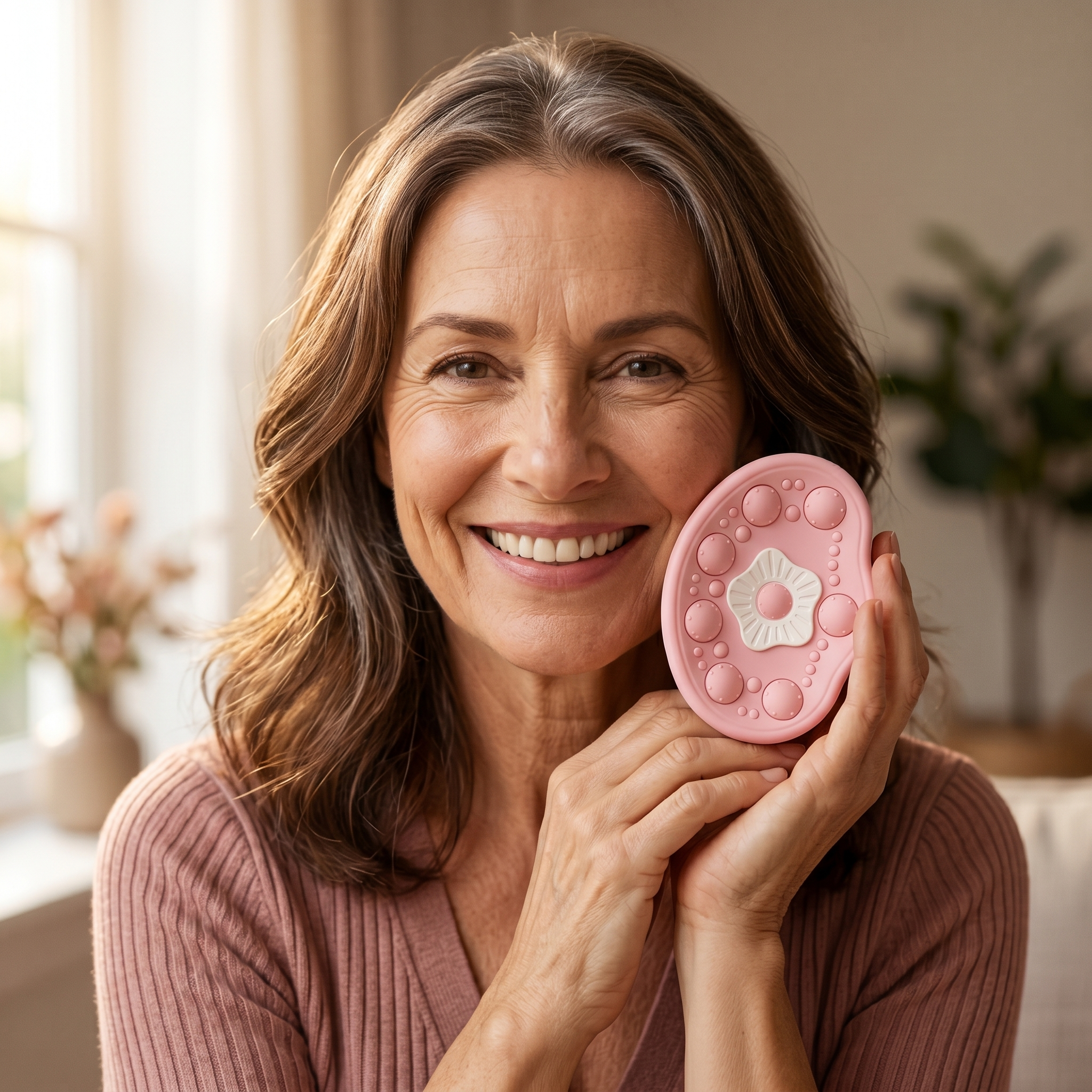
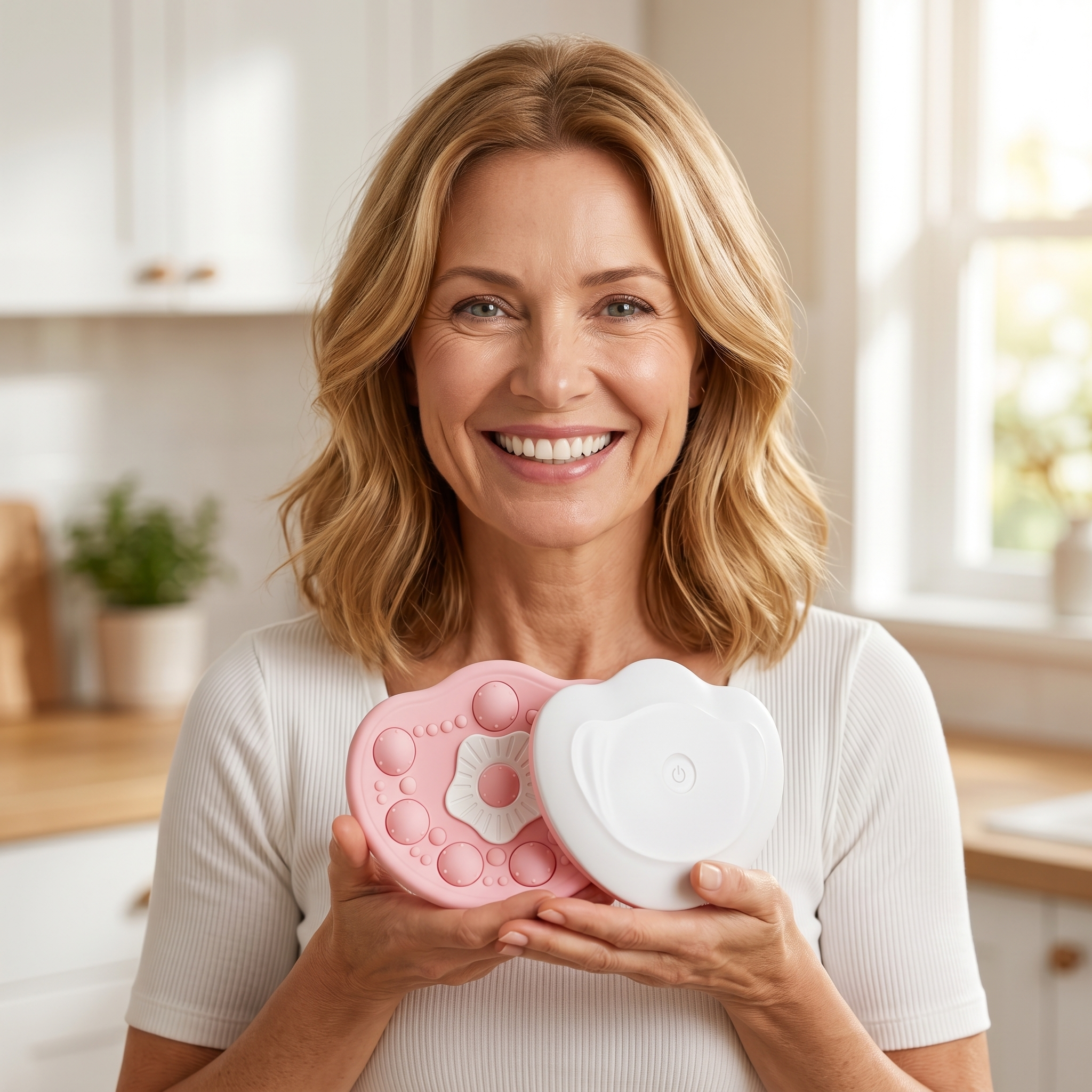
Today's Offer: The Luvi Lift Trilogy
- FREE Express Shipping